Human Rights Memorial -

I believe that the display at the memorial is informational, it helps to viewers understand what people were going through back them in the times of the holocaust, civil rights and war. They have a collection of quotes from inspirational people and a couple pictures to go along with it. As I read the quotes it really brought an emotional feeling to me. I learned about the time in my history classes in high school - but standing and reading actual quotes in front of me was really a dramatic effect.


The way that the architecture and the way that it was displayed really had an effect on it also, it was simply yet bold. The information was very beneficial to not only me, but the other viewers. When I was reading and observing the memorial I started to think and really ask myself, "How did they get through it all," "What was it like," and "How they have grown and dealt with it throughout their life." Even though I have all these questions that can only be answered by the ones that experienced it, some of the quotes and stories that were writing on the stone helped me answer the questions that I had.


As you walked down the display there seemed to be a "Tableaux" display - It started with the earliest time and ended with the most recent time. As it was telling the story in order. Even though it was only words it helped communicate and spoke to the viewers. There wasn't a display or somewhere saying who the architect was, but what was more important was the information that was given and displayed. There were not only quotes and stories from the adults, but children at a young age as well.


I really enjoyed the memorial because i appreciated the information that it gave, it was written and displayed for the viewers to actually picture what was going on. It can be very educational to the ones that aren't clear about the hardships back then. It was beneficial to me and really made me have respect and hope for the ones that had to not only go through that times of hardship, but experienced it. The ones that were suffering and the ones that died for standing up for what they believe in.

Here are different pictures that I took of the memorial. You can see and read the different quotes and stories that have been told. Some of the inspirational people that have quotes there are: Anne Frank, Martin Luther King, Jr, Henry David Thoreau, Helen Keller and Eleanor Roosevelt
 I believe that the display at the memorial is informational, it helps to viewers understand what people were going through back them in the times of the holocaust, civil rights and war. They have a collection of quotes from inspirational people and a couple pictures to go along with it. As I read the quotes it really brought an emotional feeling to me. I learned about the time in my history classes in high school - but standing and reading actual quotes in front of me was really a dramatic effect.
 The way that the architecture and the way that it was displayed really had an effect on it also, it was simply yet bold. The information was very beneficial to not only me, but the other viewers. When I was reading and observing the memorial I started to think and really ask myself, "How did they get through it all," "What was it like," and "How they have grown and dealt with it throughout their life." Even though I have all these questions that can only be answered by the ones that experienced it, some of the quotes and stories that were writing on the stone helped me answer the questions that I had.
 As you walked down the display there seemed to be a "Tableaux" display - It started with the earliest time and ended with the most recent time. As it was telling the story in order. Even though it was only words it helped communicate and spoke to the viewers. There wasn't a display or somewhere saying who the architect was, but what was more important was the information that was given and displayed. There were not only quotes and stories from the adults, but children at a young age as well.
 I really enjoyed the memorial because i appreciated the information that it gave, it was written and displayed for the viewers to actually picture what was going on. It can be very educational to the ones that aren't clear about the hardships back then. It was beneficial to me and really made me have respect and hope for the ones that had to not only go through that times of hardship, but experienced it. The ones that were suffering and the ones that died for standing up for what they believe in.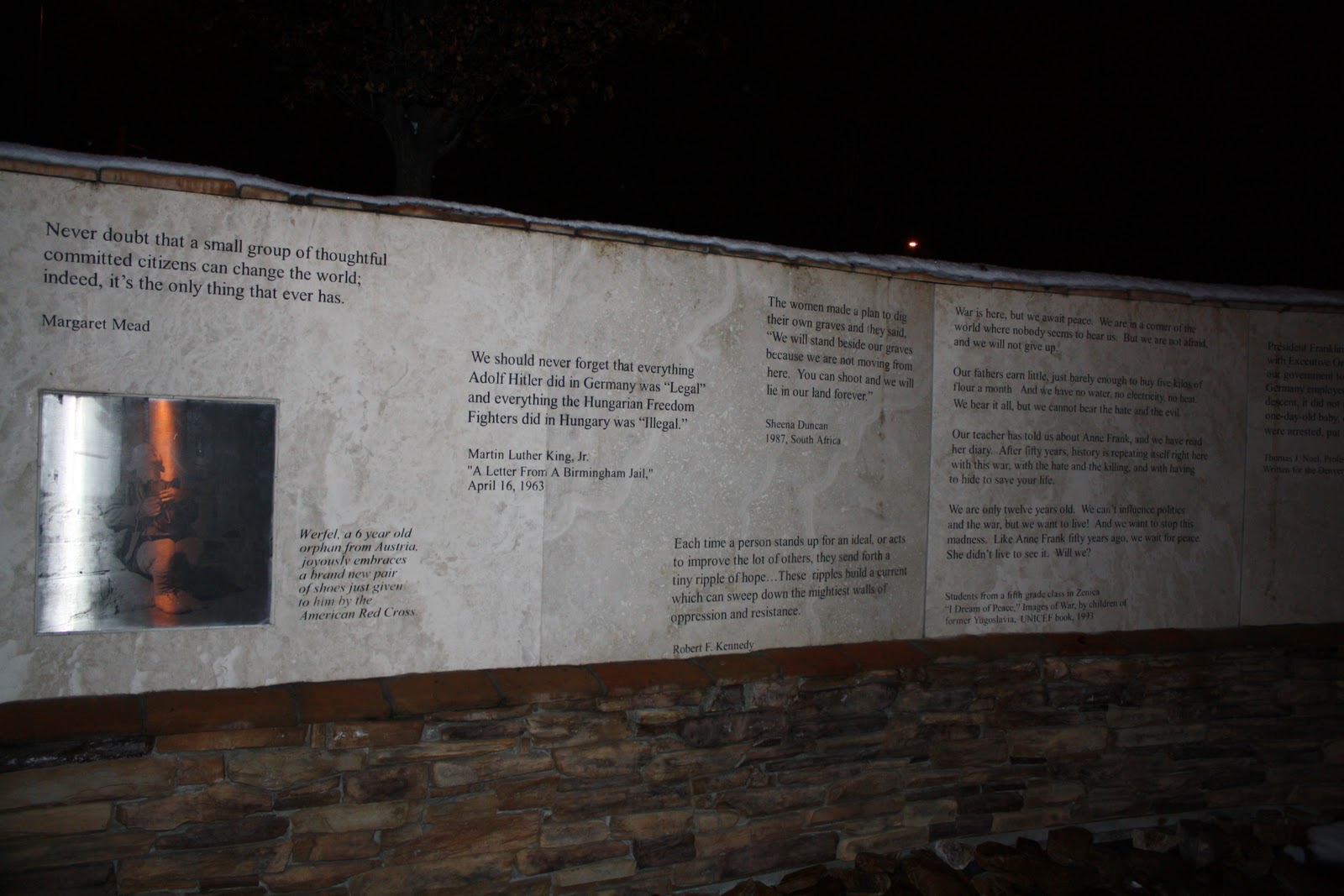
 Here are different pictures that I took of the memorial. You can see and read the different quotes and stories that have been told. Some of the inspirational people that have quotes there are: Anne Frank, Martin Luther King, Jr, Henry David Thoreau, Helen Keller and Eleanor Roosevelt


